

On that day, 19 terrorists planned and subsequently hijacked four airliners. They then flew one into each of the Twin Towers at the World Trade Center in New York City. The third plane crashed into the Pentagon, the headquarters of the United States Department of Defense, in Arlington County, Virginia. The fourth plane crashed in a rural Pennsylvania field during a passenger revolt.
A total of 2996 lost their lives that day, including the 19 murder-suicide hijackers. Countless more died prematurely in the years that followed from exposure to the toxic dust that engulfed lower Manhattan after the Twin Towers fell. The New York skyline was forever changed in an instant, along with aviation security. The death and destruction which occurred that day, in the heart of the world’s financial capital, was simply beyond comprehension.


APAC’s Regional Director flew in from Sydney late in the afternoon and joined me for a debrief over dinner in Hong Kong. We returned to our hotel around 8:30pm. At the time, we were staying at Bishop Lei International House, an unassuming three-star establishment in Mid-Levels on Hong Kong Island. Its rooms were tiny, barely fitting a bed and side table, and its amenities were rather limited. For example, the only English-language channel on television was CNN. As a result, I'd often watch it after dinner, which I did that day.

At 8:49pm, minutes after turning on the TV, CNN cut live to scenes of smoke pouring from the World Trade Centre's North Tower. American Airlines Flight 11 had struck the building just three minutes earlier, at 8:46 am local time. Along with millions of others, I watched live as a second plane struck the South Tower soon after. I still remember seeing United Airlines Flight 175's fuzzy silhouette come into view as the news anchors debated the scene. I thought to myself, the camera angle made the plane look unusually close to the unfolding tragedy. I then watched each tower fall and continued watching through the night until 7 World Trade Centre collapsed at 5:20am Hong Kong Time.
I recall vividly how hypnotic the news coverage was. The scenes being broadcast live simply beggared belief. There was also a palpable fear that high-profile buildings were being targeted globally. At the time, my company’s Hong Kong office was based in the Bank of China building. Its distinctive diagonal facade made it one of the city’s most iconic towers. If terrorists were targeting high-profile buildings worldwide, then this was an obvious target. Should I stay away from the office?
At one point, emotionally overwhelmed, I tried calling my parents to tell them I loved them. However, they were on a tour bus in Portugal, without international roaming access. They remained unaware of the news unfolding in the USA until they reached their hotel that evening. Real-time online messaging was still years away. When the planes crashed into the World Trade Centre, it was a full six years before the first iPhone. There was no Facebook; no Twitter or Instagram.


On 13 September I caught an evening flight back to Sydney. As fate would have it, I was flying Ansett Australia. While my Boeing 747 flew south, Australia’s second-largest airline collapsed into liquidation. All flights were cancelled shortly after 10:00 pm, and its aircraft were grounded. My plane, already in the air, was one of the last to land the following morning. If memory serves me well, the last plane, an overnight flight from Perth, landed shortly after us. I recall sitting in the aircraft’s front cabin, which was almost completely empty. It was clear then that 9/11 was already taking its toll on the aviation industry as people deferred or cancelled their travel plans.
Months later, I was in New York on business. I recall visiting Ground Zero and seeing the hole in the ground filled with debris where the towers once stood. Skyscrapers in the surrounding neighbourhood still bore the scars of the day. This included broken windows, damaged facades and boarded-up street-floor tenancies. It was hard to comprehend that the South Tower, and its 108-floor outdoor observation deck I’d once enjoyed, was gone. That's a retrospective post for another time. A decade later, I took Mum and Dad to visit the 9/11 memorial, just months before Dad passed away.
I read recently that Madeline Amy Sweeney, a flight attendant on Flight 11, was born just two months after me. She was murdered at the age of 35. As I reflect on my life and last year’s 60th birthday celebration, her death resonates deeply. I have so many wonderful memories from the last 25 years, while Amy was cruelly denied the same experience. This really brings home the tragic human toll of that fateful day. Likewise, my memories of Hong Kong will be forever linked with those of 9/11.


I recall vividly how hypnotic the news coverage was. The scenes being broadcast live simply beggared belief. There was also a palpable fear that high-profile buildings were being targeted globally. At the time, my company’s Hong Kong office was based in the Bank of China building. Its distinctive diagonal facade made it one of the city’s most iconic towers. If terrorists were targeting high-profile buildings worldwide, then this was an obvious target. Should I stay away from the office?
At one point, emotionally overwhelmed, I tried calling my parents to tell them I loved them. However, they were on a tour bus in Portugal, without international roaming access. They remained unaware of the news unfolding in the USA until they reached their hotel that evening. Real-time online messaging was still years away. When the planes crashed into the World Trade Centre, it was a full six years before the first iPhone. There was no Facebook; no Twitter or Instagram.


As you can imagine, very little work was done in the office the following day. Instead, we sat around recalling the events of the previous night, reflecting on the profound shock and utter disbelief we all felt. Newspapers delivered to the office were also a stark reminder of everything we’d witnessed. Hong Kong’s tabloid newspapers printed graphic images on their front page. This included photos of people clinging to pillars near the ugly gash American Airlines Flight 11 had carved through the North Tower, and of people falling to their deaths. It was interesting insight into cultural differences.
Over the years I’ve become used to Chinese media publishing graphic images Australian media outlets would consider gratuitous in nature. That said, much to my surprise, the Australian Financial Review's front page on September 12 led with "The Falling Man", a confronting image of a jumper.

Months later, I was in New York on business. I recall visiting Ground Zero and seeing the hole in the ground filled with debris where the towers once stood. Skyscrapers in the surrounding neighbourhood still bore the scars of the day. This included broken windows, damaged facades and boarded-up street-floor tenancies. It was hard to comprehend that the South Tower, and its 108-floor outdoor observation deck I’d once enjoyed, was gone. That's a retrospective post for another time. A decade later, I took Mum and Dad to visit the 9/11 memorial, just months before Dad passed away.
I read recently that Madeline Amy Sweeney, a flight attendant on Flight 11, was born just two months after me. She was murdered at the age of 35. As I reflect on my life and last year’s 60th birthday celebration, her death resonates deeply. I have so many wonderful memories from the last 25 years, while Amy was cruelly denied the same experience. This really brings home the tragic human toll of that fateful day. Likewise, my memories of Hong Kong will be forever linked with those of 9/11.


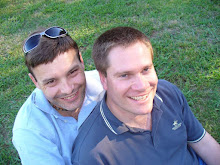
One final note. I've illustrated this post with photos I took during my second visit to the Big Apple in 1998. A friend, Ian, and I decided on the spur of the moment to take advantage of a discount fare and spend a week in Manhattan. I'll share more about this trip in another post. While in New York, we visited the Observation Deck on the South Tower. As you can see, the view from 420 metres above street level was truly spectacular.



 Posts
Posts

