
Munich was hosting the Games in 1972 when, on 5 September, eight Palestinian terrorists from the Black September militant group broke into the Olympic Village, killed two members of the Israeli team and took nine hostages. The hostages were later killed by the militants during a failed rescue attempt, along with five of the terrorists and one policeman.
The Olympic Games were suspended for 34 hours, and a mass was held in the main stadium to commemorate the victims. In defiance of the terrorists, the Games continued at the insistence of the IOC President Avery Brundage, who famously said, "The Games must go on!" His decision was endorsed by the Israeli government and the Israeli Olympic team.

We arrived in Munich early evening on 4 September. Our arrival coincided with the 18th anniversary of the infamous Olympic siege the following day. As a result, Dean and I made it our mission to visit the Olympic Stadium and see its arena for ourselves. I recall floral tributes lying at the base of a modest and rather austere memorial. The image of it above was sourced from the web. In more recent years, a partially enclosed memorial with exhibits and photographs has opened at Olympiapark.
Dean and I also ventured up the 291-metre-high Olympic Tower (Olympiaturm), a telecommunications tower located on the edge of the Olympiapark. Halfway up the tower, at 190 metres, sits an observation deck. It offers a superb view of the expansive park grounds and the surrounding city.
However, one location we visited in Munich has always stuck with me. On September 6, we took a local train to Dachau, approximately 16 km north of Munich. This town was home to one of the first concentration camps built by Nazi Germany. It opened in March 1933 and remained in operation until the end of the war. It was established to intern political opponents of the Nazi Party. However, in time, its mandate expanded to include forced labour, and eventually, the imprisonment of Jews, Romani, Germans, and Austrians that the Nazi Party regarded as criminals, and, finally, foreign nationals from countries that Germany had conquered.


Dachau was a sobering experience. It was the first Nazi concentration camp I’d ever visited. These days, much of the complex has been demolished. In its wake lie row after row of brick foundations for the 32 wooden barracks that once stood here. At one end of the complex, a handful of administration buildings have been retained. These now house exhibits that tell the harrowing story of the camp’s history. I've sourced a couple of images from the web that give you a sense of what remains.
Dachau wasn’t Nazi Germany’s largest concentration camp, or one of its notorious “Final Solution” outposts. However, as one of the first camps, it pioneered and refined features synonymous with the concentration camp system. As a result, its activities were often highly experimental, including barbaric scientific research testing the limits of human endurance and subjugation.
For example, "high altitude" experiments subjected victims to rapid decompression to pressures found at 4,300 metres. The doctors wanted to understand what happens to a Luftwaffe pilot when their aircraft suddenly decompresses. Victims of these experiments experienced spasmodic convulsions, agonal breathing and eventual death.
Hypothermia experiments involved immersing victims in vats of icy water or strapping them down naked outdoors in freezing temperatures. Attempts at reviving the subjects included scalding baths and forcing naked women to have sexual intercourse with the unconscious victim. These experiments killed many victims, while others were subsequently murdered to conduct autopsies.
On other occasions, victims were deprived of food and forced to drink only salt water to simulate the experience of sailors marooned at sea. Surviving prisoners tell stories of victims licking floor tiles that had been mopped in a desperate attempt to source fresh water. The list of unbelievably inhumane experiments just goes on and on.

Although our most visceral moment was possibly a tour of Dachau’s crematorium. While its ovens were never used in conjunction with a gas chamber, they were constructed to dispose of a growing number of corpses. This includes inmates murdered by medical experiments, those killed by disease or malnutrition running rampant through the camp, and those executed for trivial misdemeanours.

On a lighter note, we also took advantage of the late-summer sunshine and spent an afternoon wandering the grounds of Schloss Nymphenburg. This magnificent Baroque palace was the summer residence of the Bavarian royal family for over two centuries. The gardens and surrounding parkland feature a stunning garden parterre and an 800-metre-long grand canal that culminates in a semi-circular, marble waterfall.

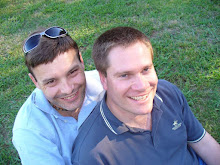
After three intense days in Munich, Dean and I boarded a train for Venice on 7 September. We scheduled a daylight journey to experience the German countryside and the Austrian Alps. Our route took us over the Bremer Pass and down the Upper Wipptal valley into Italy. We loved watching the verdant landscape and iconic villages rattle by as we climbed the pass. Above is a photo of me somewhere south of Innsbruck.
We eventually reached the shores of the Venetian Lagoon late afternoon. We based ourselves at a campground in Fusina, a coastal town popular with backpackers. From here, we caught a ferry each day across the lagoon to Zattere in Venice. I’ll share more about our time in Venice soon.



 Posts
Posts


No comments:
Post a Comment