
I spent my year in upstate New York living with the Kimball family. Bill and Mary were wonderful host parents, welcoming me warmly into their home. Their three teenage daughters, Debbie, Marcia, and Sharon, also sacrificed a lot to have a foreign teenage boy live among them. My year in the USA was a profoundly life-changing experience. Without a doubt, much of who I am and who I became was shaped by my time with the Kimballs.
My mother once summed up the significance of my exchange year when she said, “You left home a boy and returned a man.” I often describe how momentous the experience was by simply listing the contrasts I experienced upon arriving in Syracuse.


Overnight, I went from a household dominated by males (my father and his three sons) to one dominated by females (Mary Kimball and her three daughters). I’d also relocated from a tightly regulated, partially socialist economy to one dominated by laissez-faire capitalism.
Remember, these were the nadir years of New Zealand’s Third National Government, led by Robert Muldoon. At the time, the nation had strict import controls (you couldn’t bring many things into the country without a government quota license), highly regulated wage and price controls, and comprehensive “cradle to grave” social security, including universal health care.

Furthermore, a larger, more liberal economy had clearly generated a higher standard of living for my American host family. Their home had a swimming pool, cable TV, ducted central heating, a grand piano in the living room, an expansive basement with a table tennis table, and cupboards filled with an array of consumer goods and specialist products I'd never seen before. At the time, my New Zealand family had none of those things.
In my final days, I took a photo of the numerous cleaning products under the kitchen sink to showcase this consumption-driven economy. Comments I wrote on the back of the printed image reference a similar scene under the bathroom vanities and in the laundry. I'm sure my host family, had they known, would have considered this a rather curious thing to do.


Syracuse was a Rust Belt city of more than 382,000 people, compared with my sleepy hometown’s population of 5,120. It had high-rise office buildings, freeways, malls, and a 55,000-seat domed sporting arena. This was also the era of Ronald Reagan, a time when Cold War rivalry was generating increasingly vitriolic geopolitics. In March 1983, four months before I flew in, Regan had described the Soviet Union as an evil empire. Then, barely a month after arriving, the Soviets shot down Korean Air Lines Flight 007, killing 269 people.


On the first day of my High School social studies class, the teacher began the lesson with a lengthy monologue extolling the virtues of the American system while pillorying the Soviet Union's communist regime. I was shocked. I'd never heard a teacher expound their political views before, or tender such a blatantly biased viewpoint. It was a confronting introduction to America's political discourse and a revealing insight into the nation's education system.

With so many contrasts to absorb, it was inevitable that I suffered some culture shock. This dislocation was further magnified by the simple fact that externally, I looked and sounded normal. That is, I spoke English fluently, unlike students from South America and Europe the school had previously hosted; I dressed like an American and was familiar with many of the cultural touchstones that shaped American life.
As a result, people around me failed to appreciate that I was often overwhelmed and disoriented in the early months of my exchange year. It also didn’t help that Sharon, the Kimball’s youngest daughter, wasn’t keen on hosting a male exchange student. To make matters worse, she’d given up her room to accommodate me.
As a result, people around me failed to appreciate that I was often overwhelmed and disoriented in the early months of my exchange year. It also didn’t help that Sharon, the Kimball’s youngest daughter, wasn’t keen on hosting a male exchange student. To make matters worse, she’d given up her room to accommodate me.
For the first few weeks after my arrival, Sharon was the only sibling in town and made it clear my presence really wasn't appreciated. Although, in fairness to her, I was a rather quirky teenager with limited social skills, so I didn't exactly endear myself to her. I’m sure the entire family will happily testify to the many challenging moments we experienced in those early months.

My host father, Bill, was a warm, gregarious, and extroverted man. He welcomed me with open arms. At first, his tactile and engaging manner was a little disconcerting. However, by the time I left the USA, he’d become one of my closest companions. Years later, my mother commented on how this experience transformed the dynamic between my father and me.
As an aside, Bill was also an incredibly confident driver. Some would say, assertive. I'd regularly grip the car seat as he boldly weaved his way through highway traffic. My mother said that my driving skills improved dramatically during my exchange year, even though AFS banned students from driving. Apparently, I'd become situationally aware and very astute at checking car mirrors while driving.
In short, my year in the USA set me on the path I’ve travelled ever since. I returned, resolute in my determination to attend university. Before that, I’d had little interest in higher education. It was at university that I met the Wallis family, who influenced my decision to relocate to Australia, which in turn led to my backpacking through Europe and ultimately settling in Sydney.
My university degree then got me in the door at IBM Australia, my first career role, which in turn led to other roles in the IT industry that ultimately saw me become the Chief Operating Officer of a global company. This, in turn, gave me the opportunity and resources to travel the world, ticking country after country off my bucket list.


This exchange year opened my eyes to a wider world, broadened my horizons, and set in motion a passion for travel and cultural discovery. In essence, the year in Syracuse emboldened me to test myself and push boundaries, knowing that I could endure and thrive. The self-belief it instilled in me gave me the courage to move to Australia in 1990 and then to the UK in 2005, before returning to Sydney in 2011. It taught me to strive and experiment in ways that have served me well in the decades since.
As I look back on the last 40 years, I’m eternally grateful to Bill and Mary for their generosity. Those 11 months I spent living under their roof shaped me as a person more than almost any other life experience. I often wish there were a way to express the magnitude of how transformative and profound the simple act of sharing their home was. Perhaps this post goes some way to achieving this goal.
I last saw Bill and Mary in 2001. I flew to Syracuse overnight while visiting New York City on business. Before that, in 1993, we'd caught up while they were on vacation in New Zealand. We last spoke by phone in September 2020, at the height of the COVID-19 pandemic. As for Syracuse, I last visited the city on a day trip from Canada in 2012. I can't imagine I'll ever go back as the Kimballs have long since relocated.

So, where did I go, and what did I do in Country No.2? I flew into Los Angeles on 25 July 1983. That's me above, departing from Auckland Airport. I flew with Air New Zealand in a Boeing 747-200, along with dozens of other teenagers heading out on their own AFS exchange year. At the time, this aircraft couldn’t reach California in a single hop, so we transited through Honolulu. This involved disembarking in the early hours of the morning and being corralled into a bleak transit lounge while the aircraft was refuelled.
Upon arriving in Los Angeles, we joined more than a hundred Australian exchange students for an orientation week hosted at UCLA. I then flew to Syracuse via Chicago with American Airlines, transferring onto a commuter flight in O'Hare with the help of local AFS volunteers. I vividly recall the moment I met my host family for the first time. I was so overwhelmed by emotion that I found myself simultaneously exhilarated and on the verge of tears. I didn’t know what to do, so in the moment, I simply hugged my host mother, which took her completely by surprise.


In the months that followed, the Kimballs took me on a family summer vacation to Washington DC, and Virginia Beach. On 3 October, the local AFS chapter took me and other exchange students on a day trip to Niagara Falls. During our bus tour, we briefly crossed into Canada to view the Horseshoe Falls up close. This was the first of three trips I eventually took to Canada.


While in the USA, I also joined a school trip to New York City with the Arts Club. I recall that we stayed in the Hotel Edison on the edge of Times Square. While in the Big Apple, we visited museums and art galleries, saw a Broadway musical (La Cage aux Folles at the Palace Theatre), and explored many of the city’s iconic attractions including Central Park, the UN General Assembly, the Statue of Liberty and the Empire State Building.


As I look back on the last 40 years, I’m eternally grateful to Bill and Mary for their generosity. Those 11 months I spent living under their roof shaped me as a person more than almost any other life experience. I often wish there were a way to express the magnitude of how transformative and profound the simple act of sharing their home was. Perhaps this post goes some way to achieving this goal.
I last saw Bill and Mary in 2001. I flew to Syracuse overnight while visiting New York City on business. Before that, in 1993, we'd caught up while they were on vacation in New Zealand. We last spoke by phone in September 2020, at the height of the COVID-19 pandemic. As for Syracuse, I last visited the city on a day trip from Canada in 2012. I can't imagine I'll ever go back as the Kimballs have long since relocated.

Upon arriving in Los Angeles, we joined more than a hundred Australian exchange students for an orientation week hosted at UCLA. I then flew to Syracuse via Chicago with American Airlines, transferring onto a commuter flight in O'Hare with the help of local AFS volunteers. I vividly recall the moment I met my host family for the first time. I was so overwhelmed by emotion that I found myself simultaneously exhilarated and on the verge of tears. I didn’t know what to do, so in the moment, I simply hugged my host mother, which took her completely by surprise.


I returned to Canada a week later, from 7-10 October, on a school trip to the Shakespeare Festival at Stratford in Ontario. I recall enjoying productions of the Bard’s Macbeth and As You Like It. I returned to Canada a third time in May 1984. I stayed with a family in Toronto introduced to me by a teacher from my high school in New Zealand. I spent six fun-filled days exploring Canada’s largest city, visiting the record-breaking CN Tower, and enjoying my very first roller coaster ride.
I vividly recall the day I rode the rollercoaster at Canada's Wonderland. It was 30 May. Why do I know the date? There was an annular solar eclipse shortly after noon that day. Toronto was outside the path of totality but still saw about a third of the sun get "eaten" by the moon's disc. The phenomenon cast some extraordinary crescent shadows on the ground during the event. It would be another 28 years before I finally witnessed an actual eclipse.


While in the USA, I also joined a school trip to New York City with the Arts Club. I recall that we stayed in the Hotel Edison on the edge of Times Square. While in the Big Apple, we visited museums and art galleries, saw a Broadway musical (La Cage aux Folles at the Palace Theatre), and explored many of the city’s iconic attractions including Central Park, the UN General Assembly, the Statue of Liberty and the Empire State Building.
My time in the USA finished with a road trip involving all the AFS students in my immediate area. Over a week, we visited Cleveland, Ohio, for the 4th of July holiday, then travelled on to Old Saybrook on the mouth of the Connecticut River.
My exchange year finally ended on 14 July 1984. I flew out of JFK on 12 July, stopping in Los Angeles and Honolulu, and arriving back in New Zealand on election day. Sadly, I couldn’t vote in my first election as I hadn’t been in the country for 24 hours. This election saw the New Zealand Labor Party return to power for the first time in nine years.
Under the leadership of David Lange, the Fourth Labor Government radically reformed the nation’s economy. Within a few short years, a conservative and highly regulated economy was dramatically transformed. Later that year, Ronald Regan won a second term in office, setting in motion events that led to the fall of the Berlin Wall and the end of the Cold War. 1984 was clearly a transformative year for more than just me.
My exchange year finally ended on 14 July 1984. I flew out of JFK on 12 July, stopping in Los Angeles and Honolulu, and arriving back in New Zealand on election day. Sadly, I couldn’t vote in my first election as I hadn’t been in the country for 24 hours. This election saw the New Zealand Labor Party return to power for the first time in nine years.
Under the leadership of David Lange, the Fourth Labor Government radically reformed the nation’s economy. Within a few short years, a conservative and highly regulated economy was dramatically transformed. Later that year, Ronald Regan won a second term in office, setting in motion events that led to the fall of the Berlin Wall and the end of the Cold War. 1984 was clearly a transformative year for more than just me.

NOTE: 20 November
I've scanned several old photos to illustrate this post. Some of these images have stood the test of time better than others. Several, such as those of the Mony Tower and the Carrier Dome, have all but faded to red. It took a lot of Photoshop manipulation to restore the more life-like colours you see here.
I’ve also used AI software to colourise the opening image. The original black and white photo was published in an old Bank of New Zealand staff magazine. The final result isn't too bad, all things considered. Digital photography clearly has its advantages.
One final observation. Looking back through my photo albums from this period, I'm struck by how few images there are of people. I recall my mother making a similar observation. "Where are all the people?" she said when my final rolls of film were developed. Forty years on, I can finally appreciate the absence she'd noted.
Two things stand out about this observation. First, a large chunk of my exchange year was relatively lonely. I struggled to find my place and establish my identity. An absence of people genuinely reflects this experience. Second, their absence is a tangible manifestation of my introverted nature. I spent much of my childhood immersed in books and working alone on hobbies and projects. Few of these activities were ever people-centric.
As I look back over hundreds of posts published in this blog, I see the same pattern repeating itself. That is, a procession of images focused on a world that's often void of people. Sadly, I never think to take photos of group settings and often regret this oversight long after the fact.

NOTE: 30 November 2024
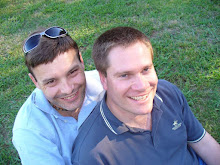
I stumbled across the image above today. It was taken during a reunion with Bill and Mary in New Zealand in 1993. This was the first and only time they met my parents.



 Posts
Posts

