


Our walking tour of Rattanakosin began with a short walk from Sam Yot station to Wat Suthat Thep Wararam Ratchaworamahawihan. It's an ornate 19th-century Buddhist temple renowned for its 20-metre red teak Giant Swing and an eight-metre bronze Buddha. As we approached the complex, a friendly local encouraged us to step through a side gate that took us through immaculately white-painted rows of housing used by the temple monks.


We removed our shoes and walked through the Ubosot of Wat Suthat. An ubosot is an ordination hall used for rituals on Buddhist sabbath days. This ubosot is said to be the longest in Thailand. It’s home to a seated Buddha silently worshipped by rows of ceramic monks. The inner walls of the ubosot are covered in detailed murals painted by craftsmen during the reign of King Rama III. The overlook effect is magnificent. However, the highlight for me was a row of fans by the entrance pumping out a refreshing breeze.


We then visited the main temple, a soaring white collonaded building surrounded by an inner courtyard encircled by a covered atrium. Inside sits another dramatic seated Buddha, and more incredibly ornate mural-clad walls. Here’s where we broke from tourist tradition and skipped a viewing of the Giant Swing. We decided that images of two crimson poles just weren’t worth the effort.


Instead, we walked 500 metres to Wat Ratchabophit Sathitmahasimaram Ratchaworawihan (please don’t ask me to pronounce these names!). In keeping with tradition, each Thai monarch constructs a temple within the complex marking his reign. The result is a series of temples reflecting the architectural influences of each royal era.

Another 700-metre walk led us to Wat Phra Chetuphon Wimon Mangkhalaram Rajwaramahawihan, commonly known as Wat Pho, or the Temple of the Reclining Buddha. The temple complex houses the largest collection of Buddha images in Thailand, including a huge 46 m long reclining Buddha.


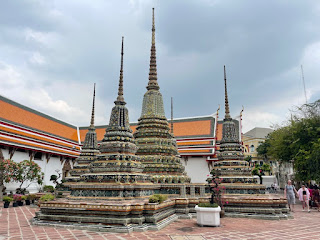
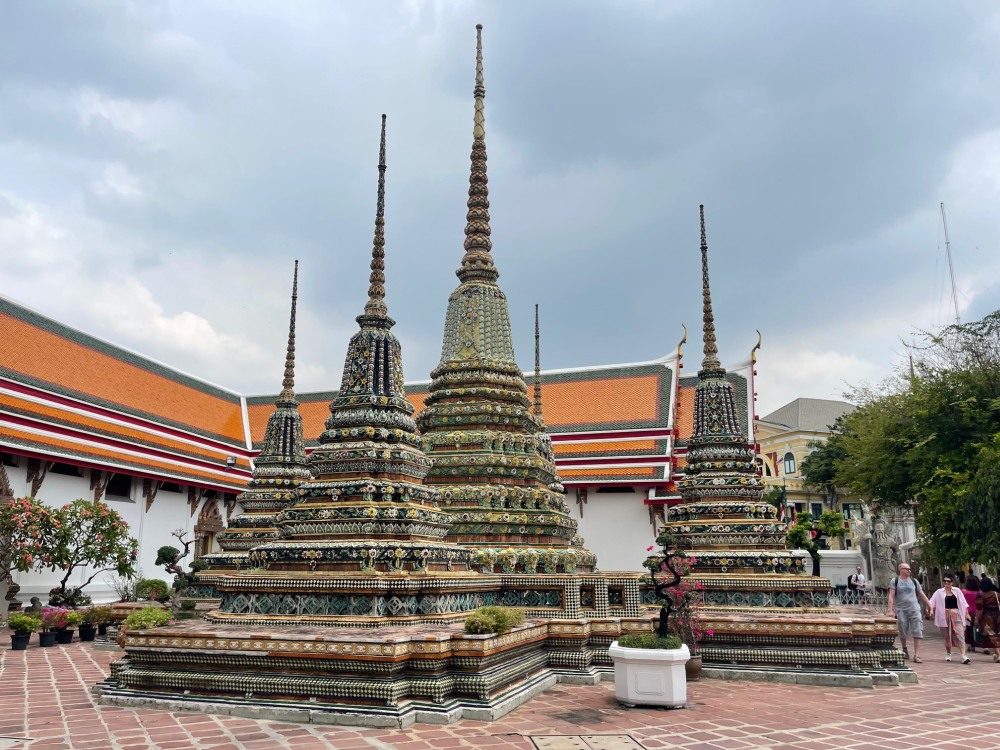
We spent more than an hour exploring Wat Pho. Our first stop was the ubosot, and its equally impressive Buddha seated high on an ornately clad tiered podium. It was then on to Phra Maha Chedi Si Rajakarn, an outdoor arena dominated by four incredibly ornate stupas. These 42-metre-high towers are dedicated to the first four Chakri kings of Thailand. Each is clad in ornate ceramic tiles, themed with a different colour palette. My photos don’t do them justice.


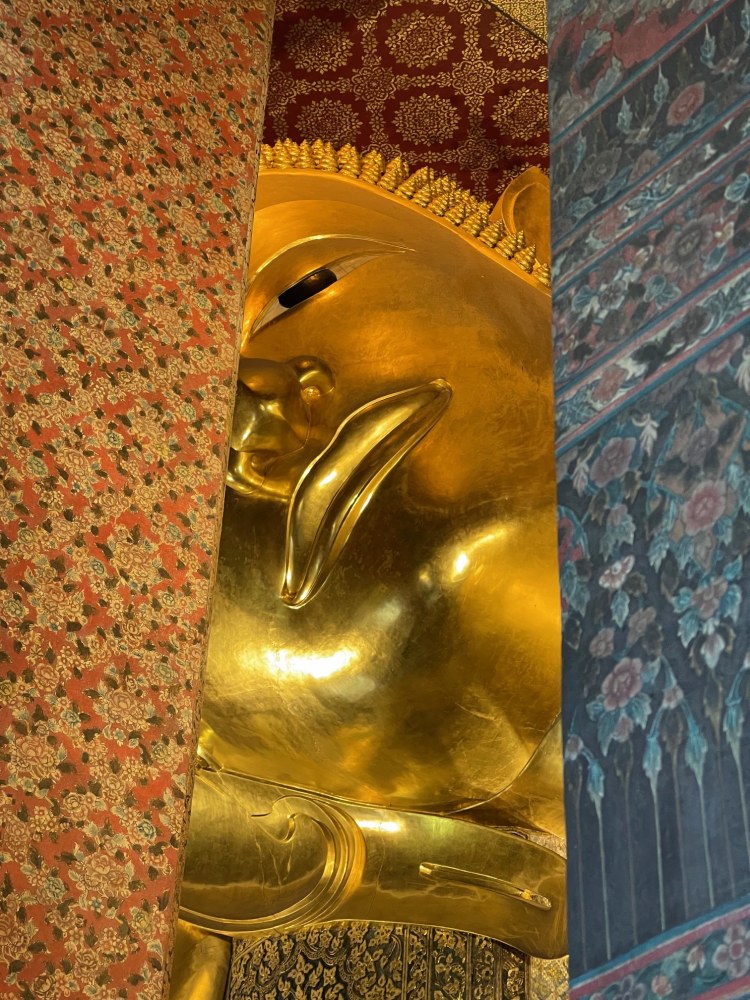
Our final stop in the complex was Viharn Phranorn, the hall that houses the temple’s famous reclining Buddha. Let’s just say this thing is huge! The figure is 15 metres high and 46 metres long. Perhaps the most impressive aspect of this Buddha is its feet. The soles are 3 metres high and 4.5 metres long and inlaid with mother-of-pearl. Garry and I patiently queued with other Instagram fanatics to capture its iconic perspective.

The far side of the hall was lined with 108 large brass bowls. Visitors fill these with alms for the temple monks. You buy a bag of small-value coins and then walk the line of bowls, dropping a coin in each. The practice is said to bring good luck to the donor. 108 is an auspicious number in Buddhism, so 108 bowls should improve your chances of good fortune. We saw these bowls in every temple. The sound of clattering coins was always incredibly mesmerising.


We removed our shoes and walked through the Ubosot of Wat Suthat. An ubosot is an ordination hall used for rituals on Buddhist sabbath days. This ubosot is said to be the longest in Thailand. It’s home to a seated Buddha silently worshipped by rows of ceramic monks. The inner walls of the ubosot are covered in detailed murals painted by craftsmen during the reign of King Rama III. The overlook effect is magnificent. However, the highlight for me was a row of fans by the entrance pumping out a refreshing breeze.


The complex was very photogenic, and we had it largely to ourselves. However, I feel we'd have gained a lot more from our visit had we employed the services of a local guide or had access to a reliable guidebook. For now, I'll let my photos do the talking.





I was keen to give the royal bowl a go. However, the monk staffing the coin desk displayed a sign advising that there was no change when you paid for your coins. I only had large Baht notes with me. As much as I loved the concept, I wasn't keen to donate five times the value of the coin bags available for purchase. Sadly, there's no luck coming my way this year.


This iconic complex on the river’s western bank is among the best-known of Thailand's landmarks. Its most prominent feature is a central tower, or prang, encrusted from top to bottom in colourful porcelain. This pagoda-like structure rises 86 metres above the surrounding complex. The prang is surrounded by four smaller satellite prangs, each equally ornately decorated.


Garry and I were amused by one popular tourist activity here. Apparently, the thing to do here is dress in traditional costume and have your photograph taken at spectacular viewpoints around the complex. We saw couples everywhere modelling their best outfits. Later, after leaving the complex, we stumbled upon an entire street of costume vendors and costume rental stores touting these outfits.
In case you're wondering, we didn't rent a costume. Honestly, the humidity was extreme. We were dripping in sweat, wearing shorts and a T-shirt. The thought of piling on ornate robes, pants and headgear wasn't the least bit appealing.


It was a lovely way to finish our walking tour of Bangkok’s royal district. We then tried to find the river pier to catch a ferry home. However, we discovered that Google Maps wasn’t our friend. We ended up taking a sweaty, 15-minute walk to the nearest metro station after our recommended route led us straight to the security gate of a military base. Definitely not a shortcut we were keen to try.





 Posts
Posts

