Showing posts with label Norway. Show all posts

Sunday, August 17, 2025

Bergen


Bergen is Norway’s second-largest city. Its population of more than 290,000 lives along the shores of a scenic fjord, called Byfjorden, a 16km waterway carved into the country’s rugged North Sea coast. It served as the nation’s capital in the 13th Century, before becoming a flagship city of the Hanseatic League, a medieval commercial and defensive European network of merchant guilds, ports and market towns. These days, it’s home to Norway’s offshore petroleum industry and subsea technological giants.

Dean Keiller and I visited Bergen in August 1990 while backpacking in Europe. We added it to our itinerary after meeting one of its residents, a woman named Olga, while travelling in Eastern Europe. Olga insisted we visit her while regaling us with stories of Bergen’s natural beauty.


In hindsight, the city proved rather underwhelming. Knowing what I know now, I’d have skipped it and spent our time visiting more dramatic fjords further north, or touring sights elsewhere in Europe. In fact, the most memorable aspect of Bergen was the journey there.

Unbeknownst to us, the Bergensbanen railway from Oslo to Bergen passes through one of the most breathtakingly scenic alpine landscapes in all of Europe - and that’s saying something! As you travel towards Bergen, the train steadily rises from the coast towards Hardangervidda, an expansive alpine plateau 1,237 metres above sea level. Apparently, the polar explorers Nansen, Amundsen and Shackleton once used the region as training grounds, due to its extreme conditions.


On 16 August Dean and I caught an early morning train from Oslo. As we journeyed west, the landscape transformed from sun-speckled conifer forests to one characterised by barren, treeless moorland interrupted by numerous pools, lakes, rivers and streams. Dean and I were totally captivated by the experience. We ran from side to side in our carriage, trying to soak in as much of its grandeur as we could before the train eventually entered a series of claustrophobic single-track tunnels. 

The photo above, pulled from the web, offers a glimpse of the spectacular Hardangervidda scenery. Sadly, I have no photos of my own to share. However, I made the following entry in my travel diary, which summed it up nicely. "Spectacular scenery - snow drifts, lakes, green and rocky valleys, waterfalls, tunnels and snowsheds."

Olga met us at the station and offered to take us to our accommodation. We explained that we had nothing booked. We asked if we could stop with her for a few days? She apologised that the tenancy by-laws in her building prevented her from hosting us. Apparently, habitation in her one-bedroom property was limited to a single person, and, as I recall, overnight guests were strictly prohibited. Instead, she invited us to join her for supper.


Olga lived on the top floor of a typical Norwegian weatherboard-clad apartment building. It had the cheapest rent because tenants had to climb three floors of stairs to reach the apartment. After enjoying a meal, she took pity on us and agreed to let us spend a night in her attic, accessible via a trapdoor. I must admit, Olga was quite stressed about us staying overnight.

The following night, to avoid further inconvenience, Dean and I trekked up the slopes of Fløyen, a hillside woodland overlooking the city, and surreptitiously pitched our tent in a discrete glade. However, it rained overnight, so Olga took pity on us once again. She kindly let us sleep a final night on her apartment floor, although she warned us more than once to be as quiet as possible. I must admit Olga’s paranoia about flouting her guest ban was a fascinating insight into the collegiate and law-abiding nature of Scandinavian people. 


Our time in Bergen was spent exploring the city’s classic tourist attractions and socialising with Olga and her friends. Highlights included a wander through the local fish market in Torget, before venturing around the inner harbour to Bryggen, the city’s iconic waterfront district. It’s a protected, UNESCO World Heritage site, dominated by a dramatic row of colourfully restored timber warehouses and office buildings. These once housed wealthy members of the Hellenistic League and their commercial ventures. At its height, this seafaring league, consisting of around 200 cities and towns, dominated maritime trade in the North and Baltic Seas. The photo above was pulled from UNESCO’s website. 
 
We also walked up Fløyen to soak in the city's stunning harbour from popular viewpoints along its glade-filled paths. The view reminded me of Wellington in New Zealand, another bustling city clinging to a panoramic shoreline, hemmed in by steep, verdant hills. After completing our outdoor trek, we ventured indoors with a visit to the Natural History Museum. The museum is renowned for its massive ceiling-mounted whale skeletons (the image below was pulled from the web). We finished the day with a night on the town, dining out with Olga and her friends.


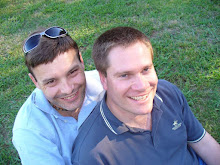
Unfortunately, I don’t recall anything more from our time in Bergen, beyond its rather inclement weather. The photo opening this post, of Dean enjoying lunch by the harbour, kind of says it all really. The city was rather damp and generally lacked appeal for tourists passing through. Apparently, Norway is one of Europe’s wettest countries, and Bergen gets 200 days of rain annually.

After three nights in Bergen, Dean and I took an overnight train back to Oslo on 19 August. We then transferred onto a train bound for Trondheim, arriving back on the North Sea Coast mid-afternoon. However, Trondheim was merely an intermediary stop on our way north to experience life above the Arctic Circle. You can read more about this backpacking adventure here.

Dean and I spent two nights in Trondheim on 20 and 21 August. We pitched our pup tent at the local campground overlooking Trondheim Fjord, a wide, fully enclosed harbour surrounded by verdant slopes. After settling into our campsite, we caught a bus into town. However, rather than exploring the city, we ended up spending our first afternoon at a table in Burger King planning the remainder of our Eurail itinerary.

Our second day in town involved more travel planning. We spent the morning booking tickets for the coastal ferry between Harstad and Bodo.  Dean had heard positive stories about the Loften Islands, which could be reached by sea from Harstad. We decided it would also be an opportunity to experience some of Norway's majestic fjords. 

Once our ferry tickets were sorted, the rest of the day was spent wandering through Trondheim's old town and along its waterfront lined with heritage buildings. Our time in Trondheim ended in spectacular style.  As our bus returned to the campground, we witnessed a breathtaking sunset over the fjord. It was a truly memorable end to what had been a largely utilitarian stopover on our Eurail adventure.

Oslo by train


My first taste of the Nordics came in August 1990. I spent three days in Oslo during a three-month backpacking odyssey through Europe. At the time, my travel companion, Dean Keiller, and I had just spent four days in Berlin. We stopped in Oslo from 13 to 16 August, while en route to Bergen, Norway’s largest coastal city.

After travelling for almost 24 hours from Hanover, we finally pulled into Oslo Central Station on the afternoon of Monday, 13 August. Getting there was half the fun. Along the way our train had been loaded onto several ferries, including one between Germany and Denmark, and another between Denmark and Sweden. 

While in Oslo, we based ourselves in a popular campground in the hillside suburb of Ekebergsletta. It was well maintained seasonal venue overlooking the city and its harbour. By day, the view was quaint enough. However, by night, the view was transformed by the city’s lights stretching into the distance. The image below, sourced from the web, provides an excellent feel for its location.


We walked into town each day via Ekeberg Park, a gentle hillside green space, filled with walking tracks and pathways. It took less than half an hour to reach the centre of town, although the city bus stopped directly outside the campground. Incredibly, the campground is still operating today, more than 35 years later. Dean and I had bought ourselves a compact pup tent a few weeks earlier in Eastern Europe. However, we discovered it wasn’t waterproof when overnight rain soaked us and our gear on our final night in town.

I loved Oslo. It was full of history, including relics from the Viking era, a civilisation that always captivated me as a child. None more so than the spectacular Viking ships on display in the Vikingskipshuset. Dean and I visited the museum on 15 August. This rather compact building is home to three meticulously restored 9th-century wooden boats, including the iconic Oseberg ship, the world’s best preserved Viking longship. It's the image that opens this blog post.

The boat was discovered buried in a grassy mound by a farmer in 1904. It features all the classic hallmarks of a Viking ship, including the high sweeping prow capped by a carved dragon’s head, and the wide shallow berth that vaguely resembles a fat bathtub. As a child, I recall being enthralled by the controversial Vinland Map, which depicts the coast of Newfoundland, and stories of Eric the Red,  discovering North America more than 500 years before Christopher Columbus. Seeing this magnificent vessel up close really brought these heroic feats to life. 


However, we started our busy schedule with a train up to Holmenkollen, home to the city’s iconic Olympic Ski Jumping facilities. It hosted events for the 1952 Winter Olympics. The site is dominated by the regulation-compliant run-in tower, a 56-metre ramp rising above the surrounding hillside. Its dramatic profile is visible from downtown Oslo, more than five kilometres away.

We viewed this impressive structure from the base of the hill and climbed its run-in tower to check out the stomach churning view from the starting blocks. The view from the top is truly terrifying! In Summer, the bowl-like landing zone is filled to create a temporary lake and a sound shell is installed on the lake’s far shore for hosting outdoor concerts. Fifteen years later, I rode the elevator again up to the starting blocks for another look with my parents. 

We then returned to town to visit Vikingskipshuset, and on to the Kon Tiki Museum, a purpose-built complex on the waterfront. Dean and I loved how each experience made history come alive. We then took a ferry back into downtown Oslo and walked more than 4 km back along the harbour to our campground. 


The previous day, our first full day in town was informally designated as a rest day after 1.5 days of continuous travel from Berlin. However, we did venture into town for a few hours mid afternoon to visit the grounds of the Royal Palace and explore the quirky Vigeland Sculpture Park. 

The park was something else. It contains more than 200 sculptures in granite, bronze, and wrought iron, including a massive carved stone pillar called The Monolith. This aptly named sculpture depicts 121 human figures clinging and writhing together in 17 metre tall column. The image above was pulled from the web says it all really.

My travel diary makes multiple references to the cost of living in Norway. The first of many price shocks occurred during our first afternoon in Oslo. We went to the Supermarket to stock up on some basic supplies, including breakfast and lunch essentials. The final tally at checkout stunned us both. For years afterwards, I’d tell people that Norway’s scenery frequently reminded me of New Zealand. As a result, while impressive, it wasn’t a once-in-a-lifetime experience. Instead, I spent two weeks paying top dollar to enjoy something I could have done back home for half the price.

Saturday, August 09, 2025

The Lofoten Islands


The Lofoten Islands extend along the coast of Norway more than 200 km north of the Arctic Circle. This scenic archipelago is currently all the rage online. I’ve seen it popping up again and again on Instagram feeds and in the travel pages of publications like the Sydney Morning Herald, Australia’s largest daily newspaper.

I can personally attest to their natural beauty, having visited them while backpacking in Europe in 1990. My travel buddy, Dean Keiller, and I spent five days exploring the Lofoten Islands by land and by sea. Our island adventure began on 22 August with an early morning train from Trondheim to Bodø. For the next ten hours, we wound our way north, covering a distance of 729 kilometres. 

We then caught an early evening bus in Bodo and travelled another 300km to Narvik, arriving shortly after midnight. Our journey north included an eight-kilometre ferry crossing over the scenic Tysfjorden. Despite the late hour, we completed the half-hour crossing in fading daylight, thanks to the lingering twilight of an Arctic Summer. Passengers were also allowed to disembark and soak in the view from the open deck. I still recall marvelling at the shadowy vista unfolding as we sailed. 

I also vividly recall getting off the bus in Narvik, along with a small contingent of fellow backpackers, and standing there in the dark, wondering what we’d do for accommodation. The hostel was closed for the night (assuming we could find it without a map), and none of us knew the municipal campground’s location. After some debate, the group decided to head into town and find a discreet place to camp for the night.


We eventually stumbled across an elevated bandstand shrouded by a concrete shell in Parkhalltaket, a nearby public park. Here we rolled out our travel mats and sleeping bags around 2:00am and spent the night sleeping on the stage. Dean was enthralled by the twilight sky at such a late hour. We’d arrived in Narvik just weeks after the midnight sun started setting again. As a result, we experienced less than two hours of dusky darkness before the horizon slowly lightened once again.

The image above was pulled from Google Maps. It's remarkable to see that the bandstand is still there, more than 35 years later. However, the stainless steel Trinigon 3 National Freedom Monument for peace and freedom is a new addition. It was erected in 1995 to commemorate the 50th anniversary of the Allies' liberation of Narvik during the final months of World War II.

The following morning, Dean and I caught a local bus to Harstad, a coastal town about 100km further north. At the time, Harstad was considered the gateway to the Lofoten Islands. Once a week, the Hurtigruten, a postal ferry, docked here before sailing to Svolvær, the island chain’s de facto commercial hub, and onward to Bodo.

We booked ourselves into the local camping ground, a relatively simple affair located on a small promontory about 5km from the centre of town. Decades later, I still marvel at the fact that we walked into town and back without a moment’s hesitation. Although the following day, I decided to hang out at the campground while Dean ventured back into town. He returned late afternoon with fish fresh off the boat, which we cooked for lunch and again for dinner.


Harstad was the farthest north we ventured when backpacking in Europe. I still recall our excitement as our train crossed the Arctic Circle south of Bodo. The milestone was made all the more memorable by a herd of reindeer who broke from the trees shortly after and ran along the tracks for more than a hundred metres.

Our ferry ride through the Lofoten Islands began early morning on Saturday, 25 August. It was a relatively uneventful passage, and the scenery was somewhat underwhelming. That is, until we entered the spectacular Trollfjord, a narrow fjord framed by soaring cliffs. The ferry carefully manoeuvred its way along this rocky passageway before being skilfully turned within its own hull length and sailing back out into Tengelfjord. The image above was pulled from the web. It barely does justice to the scenery we enjoyed. 

We had high hopes for our postal ferry excursion. However, Trollfjord was the only truly noteworthy fjord we ultimately saw in Norway. The northern end of Tengelfjord was also rather picturesque. However, it's more of a narrow sea strait rather than a fjord. In places, the strait was less than 200 metres wide, with dramatic slopes rising from the water on either side. I hope to return one day and drive the fjord-filled E39 coastal highway.  


Dean and I eventually disembarked around 10:00pm at Stamsund, a picturesque fishing village, located about two-thirds along the Loften archipelago. It was the ferry’s final port of call in the islands before making its way to Bodo on the mainland. Stamsund’s Instagram-worthy waterfront, lined with red-walled rorbuer, or fishermen's shacks, is the mainstay of many a Norwegian postcard. The buildings are constructed on land, but with one end on poles in the water, allowing easy access to vessels. The image above was also pulled from the web to illustrate this post.

The following morning, we joined backpackers from our hostel on a hike up the Steinetind, a 509-metre peak, and neighbouring Mannfallet, a mere 308 metres high. The views along the ridge line trail were simply breathtaking. The photo that opens this post was taken near the highest point on our trek, and if you look carefully at the photo below, you'll find me perched on a grassy knoll. A diary entry I made that evening noted that we picked blackberries growing wild across the mountains and enjoyed locally smoked fish for dinner.


Later that evening, we caught an overnight ferry back to Bodo. We slept on the deck along with other backpackers. Dean and I were quickly learning that there was safety in numbers wherever we chose to sleep in the open.  According to my travel diary, we eventually docked in Bodo shortly after 4:30am.

In Bodo, we met a retired air force serviceman in a bustling cafe. He’d been stationed in town during the Second World War. The old man happily regaled us with wartime stories about the bombing of Bodo before recommending a visit to the local air force base alongside the airport.

The base is home to NATO’s Quick Reaction Alert Aircraft. F-16 fighter jets of 132 Luftving are based here, ready to respond at a moment's notice to unidentified aircraft in or approaching NATO airspace. Dean and I were lucky enough to see military jets taking off and landing from the edge of the airfield at regular intervals. The roar of their jet engines and their spectacular drone-chute-assisted landings kept us enthralled for more than an hour.

Later that day, we ventured out to Saltstraumen, an impressive maelstrom, about 45 minutes by bus from the centre of town. Four times a day, a huge volume of water forces its way through a 150-metre narrow strait, generating chains of powerful whirlpools in its wake. We watched them in action from a road bridge passing overhead and from rock slabs along the shoreline. Dean decided this was the perfect opportunity to enjoy his first—and only —swim above the Arctic Circle.  I politely declined the offer to join him in the frigid Arctic waters.


Later that evening, we caught an overnight train back down the coast, stopping briefly in a town called Hell the following morning. Yes, it’s true. I’ve literally been to Hell and back. Here we transferred to a train heading towards Stockholm. For the next nine hours, our train traced the shores of picturesque alpine lakes and traversed pristine Arctic pine forests before reaching Stockholm mid-evening. Learn more about our time in Sweden in this retrospective post.


Wednesday, July 11, 2007

Soaking it up in Oslo


Most of the UK experienced record rainfall in June. Yorkshire alone experienced rainfall more than 300% above average. Across the North Sea, Oslo also reported a record month of rain since 1895 when records began. This Nordic city endured 223.9 mm of precipitation in June. Sadly, the rain continues to fall in Norway as we discovered last weekend, much to our dismay.

Garry and I joined my parents at the start of their Nordic tour for two days in Oslo. We arrived on Friday without incident, checking into our central city hotel shortly after 11:00pm. The weather dawned overcast but dry on Saturday morning. After a leisurely breakfast we selected the Munch Museum as our first tourist highlight of the day. Here we saw a pastel drawing of the Scream, a forlorn proxy for the famous oil painting stolen in 2004. The painting was recovered a year later and is currently undergoing restoration.


From here we made our way back into town, walking the length of Karl Johan Gate, considered the city's main street. Our walk took us past Oslo Cathedral and the national Parliament, before ending outside the Royal Palace which sits on a low hill overlooking the central city. We then made our way to the waterfront, encountering a second art exhibition; Steve Bloom: Spirit of the Wild. This is an outdoor display of more than 100 incredible wildlife photographs. Each giant image sits on its own display board, stacked like dominoes outside the Nobel Peace Centre.

We stopped for lunch at Aker Brygge, a new Darling Harbour style redevelopment of shops, restaurants and apartments. It was then on to Bygdøy by ferry to view the famous Gostad Viking ship, the Fram polar explorer and the original Kon-Tiki, balsa wood raft. I'd forgotten how grand Norway's nautical heritage really is.


Sunday was spent touring the Holmenkollen Ski Museum & Ski Jump Tower. The experience was made all the more surreal thanks to heavy cloud that periodically hid the jump tower from view. The starting platform sits 60 meters above the ground, a breath-taking 417 metres above sea-level. The view down the length of the jump ramp is nerve-racking to say the least.


As we left the hillside, the rain began to fall, slowly at first, but soon gathering pace. It never let up again until our departure. This made our final tourist adventure rather sodden. We caught a bus to the Norsk Folkemuseum, an open-air museum consisting of traditional houses from all over Norway. The 13th Century wooden Slav church was a definite highlight, while the rain gave us a sense of how harsh rural life really was 200 years ago.


The weekend ended on a slightly sour note. I accidentally left my camera in the bathroom at the hotel. A quick call yesterday confirmed that it hadn't been handed in. I've lost all my photos from the weekend with the exception of the image you see below. All other photos on this post came from my parents.


The large, bright Freia sign caught my eye on Saturday as we were returning from dinner. It sits atop a department store over looking the pedestrian mall running along Karl Johan Gate. It immoralises a local brand of chocolate. The company’s flagship product, Freia Melkesjoklade (Freia Milk Chocolate), has been a national favourite since 1906. Like so many domestic icons worldwide, Freia was sold to overseas interests in 1993. It's now part of the Kraft Food empire much like Vegemite in Australia.

Our flight home was also delayed three hours. At first the weekend looked as if it would end in the same disasterous manner as our trip to Geneva last year. However, our luggage was swiftly off the aircraft enabling us to dash for the last train into town. As we pulled in Paddington, our train was the only locomotive to be seen. The sight of a silent, empty Paddington was magic. It's moments like this that money can never buy.