

I visited Los Angeles for the first time as a 17-year-old exchange student in July 1983. It was my first time overseas. Along with more than a hundred students from Australia and New Zealand, I spent a week undergoing an orientation program while housed in student accommodation at UCLA. AFS, the organisation responsible for our exchange program, typically conducted this program to help non-native English-speaking students adapt to American life. However, for us Antipodeans, brought up on American films and television, the week was a bit of a joke.
Much to our frustration, we never got to explore the city. As a result, when I finally returned in 1996, I was determined to see as many of the city’s iconic sights as possible. As was my habit, I collected a fistful of brochures at the airport and mapped out my sightseeing schedule. I flew in from Frankfurt on October 22 and was scheduled to fly out again two days later to Hawaii. I’d just spent seven days attending my brother’s wedding in Austria and travelling through Prague and Berlin with my parents. With less than 48 hours on the ground, I had plenty of bucket-list sights to tick off in a relatively short timeframe.

I decided to book a full-day LA highlights bus tour. The tour initially took us to the city’s historic Spanish quarter for a walking tour (that's the LA Town Hall in the opening image of this post), then to the original Farmer’s Market in Melrose for another wander. With Halloween barely a week away, the market was filled with pumpkins and appropriately themed displays. It was the ideal location for a classic taste of America’s enduring obsession with Halloween.


Our next stop was West Hollywood, where we visited Mann’s Chinese Theatre to walk the pavement littered with the footprints and handprints of hundreds of celebrities. There's something special about spotting the handprints of Hollywood stars from a bygone era like Humphrey Bogart and Will Rogers. Like all first-time tourists, I was also delighted to finally see the giant Hollywood sign in the nearby foothills. Although it was much smaller than it appears on television!
The tour then ventured up into the hills to the Hollywood Bowl lookout for an iconic view of the city's smoggy skyline stretching south along the Pacific Coast. The tour then concluded with a drive-by tour of celebrity homes in Beverly Hills. To be honest, most of the time all we could see were high walls, security gates and hedges. We finished our tour of Beverly Hills with a final stop at Rodeo Drive, where I was in awe of the exclusive designer labels and their equally eye-watering price tags. That's me on Rodeo Drive above.
I also recall spotting the equally famous Beverly Hills Hotel from our bus. Back in the days when celebrity was worn with the elegance and grace of diamonds and mink, this hotel was where the stars played. W.C. Fields, Humphrey Bogart and the Rat Pack tippled at the bar; Katharine Hepburn did a backflip into the pool in her tennis clothes, and Elizabeth Taylor honeymooned six times in the bungalows out back. Howard Hughes famously kept one bungalow permanently available for himself.

The following day, October 24, I boarded another flight, this time bound for Hawaii. Once again, I was off to explore a destination I’d visited in transit in 1983. Back then, Air New Zealand’s Boeing 747-200 couldn’t reach the USA in a single leg. As a result, our flight stopped in Honolulu for a couple of hours to refuel in the middle of the night. However, passengers had to disembark and congregate in a secure, nondescript transit lounge before reboarding and continuing to Los Angeles.
For this return trip, with four days on the ground, I was keen to finally see Oahu. However, I ultimately saw very little of the island. A few hours after landing, a good friend flew in from Sydney to join me. Richard took one look at the pile of brochures I’d collected at the airport and laughed. They went straight in the bin. He was in town to celebrate his birthday (October 27) – and what a celebration it was.


We booked ourselves into the Hotel Honolulu, an LGBTQI friendly venue. Back then it was promoted as Hawaii’s only gay hotel, and was renowned for its somewhat camp and kitsch decor. The hotel had a sundeck on the roof. It also assisted travellers in the pre-internet age by sharing gay information. Each room featured a thick guestbook where visitors could add their comments about friendly restaurants, cheap clothing outlets, gay bars, rip-off merchants, and gay-friendly everything worldwide. They were compulsive reading.


We hit the local LGBTQI-friendly bars at night, continued the party back in our room after they closed, and eventually ventured out to bask in the sun along Waikiki Beach before repeating the cycle. I took the photo of the beach posted above to prove we actually made it to the beach at least once. By the time we were done, we’d collected a gang of three new American friends who did their best to keep up with us.


Much to our frustration, we never got to explore the city. As a result, when I finally returned in 1996, I was determined to see as many of the city’s iconic sights as possible. As was my habit, I collected a fistful of brochures at the airport and mapped out my sightseeing schedule. I flew in from Frankfurt on October 22 and was scheduled to fly out again two days later to Hawaii. I’d just spent seven days attending my brother’s wedding in Austria and travelling through Prague and Berlin with my parents. With less than 48 hours on the ground, I had plenty of bucket-list sights to tick off in a relatively short timeframe.

I decided to book a full-day LA highlights bus tour. The tour initially took us to the city’s historic Spanish quarter for a walking tour (that's the LA Town Hall in the opening image of this post), then to the original Farmer’s Market in Melrose for another wander. With Halloween barely a week away, the market was filled with pumpkins and appropriately themed displays. It was the ideal location for a classic taste of America’s enduring obsession with Halloween.


The tour then ventured up into the hills to the Hollywood Bowl lookout for an iconic view of the city's smoggy skyline stretching south along the Pacific Coast. The tour then concluded with a drive-by tour of celebrity homes in Beverly Hills. To be honest, most of the time all we could see were high walls, security gates and hedges. We finished our tour of Beverly Hills with a final stop at Rodeo Drive, where I was in awe of the exclusive designer labels and their equally eye-watering price tags. That's me on Rodeo Drive above.

For this return trip, with four days on the ground, I was keen to finally see Oahu. However, I ultimately saw very little of the island. A few hours after landing, a good friend flew in from Sydney to join me. Richard took one look at the pile of brochures I’d collected at the airport and laughed. They went straight in the bin. He was in town to celebrate his birthday (October 27) – and what a celebration it was.


We were allocated a Japanese-themed room on the top floor directly below the sundeck. It was called the Samurai Room, which we accessed via a small faux-Japanese arch bridge. The walls were also decorated with appropriately illustrated panels. Within hours, Richard had turned our room into party central, and for the next four days, that’s all we did.


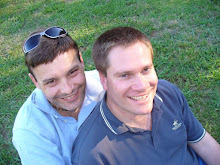
This included a guy called Ken, who kept pace for four days straight. That's him above. We christened him Kenisha in honour of our room. Richard's nickname was Doodle (He was a Graphic Artist), and mine? The Mad Kiwi. The other two lads simply gave up after two days. Hand on my heart, it was the most decadent overseas experience I've ever had.


I recall one night Richard and I went out to the infamous Hula's s, a bar built around an enormous banyan tree in the Kūhiō District. At one point we got separated. I went off to party with a group of American flight attendants, while Richard disappeared with a newfound friend. Hours later, I found myself wandering the streets of Honolulu. I was completely lost and couldn't find our hotel. At 2:00 a.m., I rounded a corner, and who do you think I bumped into? Richard, coming home from his own adventures. Fortunately, he knew how to get back to the hotel.
After partying nonstop for four days, I caught a late-evening flight back to Sydney on 27 October, while Richard stayed a few more days. It was another eight years before I returned to Honolulu and finally ventured out to explore Oahu. This time with Garry in tow. Let’s just say our return visit in 2004 was a more civilised affair! Sadly, Garry never got to experience Hula's in all its glory. Developers bought the land a few years after my decadent holiday. It reopened at the opposite end of Waihiki Beach, but the new location lacked the quirky character of the original venue.
I finally landed back in Australia early on 29 October 1996, having completed my first-ever round-the-world ticket. What an adventure it had been. Aside from relentless partying in Hawaii, I’d also gone on safari in Africa, flown a microlight over Victoria Falls, walked the cobblestone streets of Kitzbühel and Salzburg, explored the medieval heart of Prague and shown my parents where I’d once chipped off my own piece of the Berlin Wall.



 Posts

