Showing posts with label Korea. Show all posts

Wednesday, August 05, 2009

The kings of Seoul


South Korea’s capital city is home to no less than four royal palaces. It was established in 1392 by the Yi Dynasty, which ruled Korea until the Japanese occupation of 1910. The first king, Taejo, began construction of Seoul’s largest palace complex soon after declaring it his capital. Gyeongbokgung was built in 1395, dominating the heart of downtown Seoul. It remained the centre of administration until 1592 when it was burnt to the ground by invading Japanese.

The site remains derelict until 1867 when the complex was finally rebuilt by Regent Prince Heungseon Daewongun. The prince built a sprawling complex of 330 wooden buildings only to see it largely demolished by occupying Japanese in 1915. Less than ten percent of the structures were left standing until the early 1990s when restoration of the site began again in earnest. Today, a more modest structure of a dozen or so buildings stands. Construction is planned to continue until at least 2020.


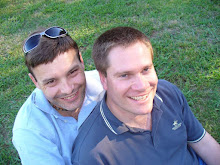
Garry and I spent a leisurely afternoon touring the palace grounds as part of our whirlwind tour of Seoul. Normally, the palace is entered via an imposing main gate called Gwanghwamun. However, the gate is currently undergoing a multi-million dollar restoration and thus is completely surrounded by enormous temporary shed and scaffolding. The gate leads to an outer courtyard called Heungryemun where we arrived in time to see a colourful ‘changing of the guard’ ceremony.


Perhaps the most spectacular section of the complex is Geunjeongjeon, or the main throne hall. From the outside the hall appears to have two stories, but inside it becomes clear that the building is a single structure with a soaring central atrium. The entire structure sits on the edge of expansive cobble-stone plaza, enclosed by a red-pillared colonnade. Behind the hall rises Mount Bugaksan, forming the perfect natural backdrop.


Equally impressive was nearby Gyeonghoeru Pavilion. It’s a two-story structure covering a massive 931 square metres, which sits on an island in a large, manmade lake. This majestic venue was used to host lavish banquets. Impressive stuff.


Garry and I also visited a second palace while in Seoul. Changdeokgung is considered the city’s most picturesque royal venue. Its buildings are laid out in harmony with the hillside on which it stands. It’s also home to the landscaped ‘Secret Garden’ filled with peaceful ponds and pavilions. The only way you can view the site is to join an organised tour. This 90-minute venture took us past most of the main highlights, but rarely gave us time to pause and absorb the spectacle as it unfolded.


Much like Gyeongbokgung, the throne hall was an automatic highlight. Injeongjeon also sits on the edge of a broad, cobbled plaza, surrounded by a colonnade. Again, like Gyeongbokgung, access to the central plaza is gained via another impressive colonnaded plaza. However, it was the equally stunning labyrinth of neighbouring buildings that captured my imagination. Each has beautifully decorated eaves, painted in bright, bold designs. It was hard to believe that this entire complex was only restored in the last twenty years, having suffered the same destructive fate under Japanese occupation as Gyeongbokgung.


The secret garden was actually a minor disappointment. The grounds and their surroundings were certainly pretty, but nothing like the stunningly manicured landscapes I’d seen in Japan. Tourist literature had given me the distinct impression these grounds would prove as spectacular. Perhaps the most memorable location was an artificial lake where the elegant Buyongjeong and Yeonhwadeng pavillons sat.


The entire scene is nestled in a tree-clad glade, reached by following a winding road from the main palace and cresting a small hill. Overlooking the lake is a terraced hillside capped by a two-story pavilion, Junamnu, that once served as the royal library. A similar single story structure nearby was once the primary book repository. Its contents were moved to the Seoul National University by the occupying Japanese early last century. It seems that invasion and occupation are a constant theme in Korean history.


The dominance of warfare on Korean culture is apparent everywhere. For example, access to the city’s underground metro stations and pedestrian underpasses is always via a lengthy flight of stairs. Every station sits far deeper than elsewhere as they double as handy air raid shelters. We also came across a photographic exhibition in the centre of town where row upon row of images from the Korean War were on display. It difficult not to be astonished by the images of a bombed and shattered Seoul, including the very location we were standing in.


However, perhaps the most fascinating image of war can be found outside the national war memorial museum. Its grounds house the most extensive display of military hardware I’ve ever seen. Everything imaginable was there from rows of tanks and armoured troop carriers, to B52 long-range bombers and missiles. The grounds even included a MIG fighter impounded after its pilot defected from North Korea and flew south.

Tuesday, August 04, 2009

Scars of war


Our first day in Seoul started early. I’d booked us on a full-day tour of the Demilitarized Zone (DMZ), the buffer zone separating North and South Korea. This is the world’s most heavily militarized border and is located an unnerving 50km from the heart of downtown Seoul. In fact, South Korea’s capital city is so close, that within minutes of hostilities breaking out, North Korean artillery guns can mercilessly pound it without ever crossing the border.


Our tour’s highlights included brief stops at the Freedom Bridge, Dora Observatory and Dorasan railway station. We also enjoyed more leisurely tours of the Third Infiltration Tunnel and the Joint Security Area (JSA) at Panmunjom. Since I’d visited the JSA before, the day’s highlight was the secret North Korean tunnel. It’s one of four such tunnels discovered thus far. Many more are believed to exist, with detection efforts continuing unabated. Each tunnel discovered thus far has been large enough to permit the passage of an entire infantry division, or more than 10,000 soldiers every hour

This particular bore was found in October 1978 following confessions from a North Korean defector. It stretches for 1,600 meters, more than 73 metres below the surface. When discovered, the tunnel had already penetrated more than 250 metres beyond the border. It's roughly hewn from pure granite and measures approximately 1.75 metres high by two metres wide. Officially, North Korea denies it’s responsible for this crude engineering feat. However, the tunnel has a steady three degree drainage slope towards North Korea and blast holes are consistently drilled from north to south.


We ventured down to its starting point via a monorail that traverses a steep, narrow intercept tunnel bored for 300 metres by South Korea. As we boarded the train, we were instructed to wear hard hats. It all seemed like a silly nanny-state instruction until both Garry and I continually hit our heads on the tunnel’s low ceiling while walking towards the border. The tunnel is blocked by a sentry outpost less than 150 metres from the border. As we walked, it was hard not to marvel at North Korea’s audacity and its sheer determination for facilitating a surprise attack.


Equally fascinating was Dora Observatory. It's one of several such outposts along the DMZ that offer South Korean's a brief glimpse of the North. Dora itself consists of an outdoor platform lined with binocular stands and an indoor air-conditioned hall with tiered stadium seating facing a six-metre wall of plate glass. The hall also housed an enormous and incredibly detailed diorama of the view itself. For most South Korean's this is as close as they'll ever get to the Hermit Kingdom. The mere existence of Dora brings into stark relief the nation's continued division and it's enduring dream of reunification.


Nearby Dorasan station is known as the last station in South Korea. It’s located just 700 meters from the southern boundary of the DMZ on the recently rebuilt Gyeongui line to North Korea. While Dongsan station has been restored, trains still do not run between North and South Korea. In March 2007 one limited test run of two five-car trains, each with 150 passengers, ventured simultaneously from the North and the South. Each train crossed the border for a few hours before returning home. Today, the station stands virtually empty, looking just as shiny and new as the day it reopened.


Our final stop of the day was the JSA itself. It had been almost six years to the day since I'd last been here. This last visit was just as eerie as the first. Once again we were told to adhere to strict protocols as both our guide and military escort nervously pleaded with members of the tour that proceeded to ignore them. Their fear was understandable. As recently as 2006, shots have been fired across this specific section of the border.

Since 1953, negotiations that maintain the current armistice have been held here in central UN-blue hued conference hut, one of several that straddle the border. On Saturday, our group was given a swift, ten minute tour of the hut. Recent sabre-rattling and nuclear bomb tests have clearly left their mark. I’m sure this JSA visit was much shorter than in 2003 and our escort was visibly more anxious.


Despite these tensions, Garry and I were still able to cross briefly into North Korea by simply walking around a central table that straddles the border. We barely had time to take a souvenir photo with a South Korean guard before being urged to leave the hut and return to the relative safety of nearby Freedom Hall. The famous ROKA pose was also present everywhere as soliders observed North Korean buildings less than 50 metres away. Some soliders were partially hidden by the edge of UN huts as they struck their pose.


Equally surreal are the two peace villages that lie inside the DMZ. In the South, villagers living in Daeseong-dong are classed as Republic of Korea citizens, however they are exempt from paying tax and other civic requirements such as military service. In the North, Kijong-dong features a number of brightly painted, multi-story concrete buildings and apartments with electric lighting. The town was oriented so that the bright blue roofs and white sides of the buildings would be the most distinguishing features when viewed from the border.

Kijong-dong has no permenant residents, as its location is deemed too tempting for North Korean citizens. Instead, caretakers sweep its streets by day and automated switches activate lights at night. It's also home to the world's tallest flagpole, towering more than 160 metres over the village. The entire artifical character of town simply brings home the equally abnormal reality of the DMZ, one of the world's last surviving Cold War relics.


Any doubt that the DMZ remains a war zone is quickly dissuaded by the visitor’s declaration our tour group had to sign. UNC Regulation 551-1 opens with the uncompromising sentence; “The visit to the Joint Security Area at Panmunjom will entail entry into a hostile area and possibility of injury or death as a direct result of enemy action.” However the declaration finishes with the reassuring statement; “If any incidents should occur, remain calm...” That sounds easy.

Monday, August 03, 2009

Sunset in Seoul


This is just the briefest of posts. Garry and I have come to the end of our third day in Seoul. As I type we're watching a large red sun drop silently behind the jagged peak's that ring South Korea's capital city. Today we spent much of our afternoon exploring Gyeongbokgung, the city's largest palace. It proved to be a spectacular example of classic Korean architecture.

In the days ahead I'll share more about our time here, including highlights of an all-to-brief five-minute excursion into North Korea and a tour of the city's beautiful Changdeogung Palace. As a teaser, the photo above shows Hwanggungu (Yellow Palace) Shrine which sat in a carefully manicured garden next to our hotel. It’s a wooden, three-storied octagonal shrine built in 1899, the last surviving remnant of an earlier altar complex dedicated to securing bountiful harvests. It’s a remarkably peaceful venue, literally a green oasis, surrounded by the high-rise hotels and office buildings of a modern, bustling city.

It's been a whirlwind, and very sweaty, three days. Tomorrow morning we're up at dawn to catch a flight to Hong Kong. Rising early is proving easy thanks to a healthy dose of jet lag.

Sunday, July 26, 2009

Five to go


We’re counting down to our next trip Down Under. On Thursday we depart for South Korea, via Hong Kong and on to the Top End of Australia. We’re making final preparations; printing hotel vouchers, buying sun lotion and setting aside items for family and friends. I’m looking forward to some well earned R&R. Work has been incredibly stressful, with long and exhausting days since our weekend in Milan. I can’t wait to kick back and explore the ancient billabongs of Kakadu.

However, before we pack our bags, there's one final event to host. Garry has invited friends over for a farewell lunch tomorrow. Today we've been preparing food all afternoon; marinating roasts, wrapping asparagus in Parma ham and baking mini pavlovas. The wine is chilling, alongside our salad ingredients and cheeseboard selection. It should be quite an afternoon.

Sunday, February 11, 2007

The day I went to North Korea

Photobucket - Video and Image Hosting

A television documentary on the KTX, South Korea's high-speed train, brought back memories of my brief visit to North Korea. In September 2003 I found myself in Seoul for a business meeting. With a weekend to fill, I booked a day tour of the DMZ (Demilitarized Zone) that separates North and South Korea. The DMZ extends across the entire Korean peninsula for 248kms. It's a strip of land 4km wide, largely devoid of a regular human presence.

Since the fall of the Berlin Wall, it's become one of the world's last remaining vestiges of the Cold War. Seoul is less than 56kms south of the DMZ putting it in range of North Korean artillery. As a result, the border remains a highly militarized area, with troops constantly on high alert.

I was able to secure a last-minute cancellation seat on tour into the Joint Security Area at Panmunjeom. Access to the JSA is restricted. Most Koreans are not permitted to enter the zone under any circumstance. As a result, on the day of my tour we were required to carry passports and dress smartly. We were warned that jeans were not permitted. Apparently, North Korea has used photos of tourists in casual clothing as propaganda. It cites their casual dress as an example of Western disrespect for its status as a nation-state.

As you approach Panmunjoem it becomes apparent that you're entering a war zone. Towering barbed wire fences line the highway preventing access to a river that marks the border between the two Koreas. At regular intervals, towers with armed guards monitor the surrounding area. Military vehicles, including tanks, can be seen from time to time.

Our first stop was the Freedom Bridge. This old wooden structure just outside the DMZ was the main transfer point for POW exchanges at the end of the Korean War. The experience is rather surreal. As you cross the trestle bridge you eventually come to a barbed wire fence barring entry into the DMZ itself. Here flowers, protest flags and banners are piled against the fence.

Local Koreans throng around these emblems of peace. This is as close as they're ever permitted to get to North Korea. The scene becomes increasingly surreal as US servicemen off duty, but still in uniform, stop to take their photo in front of the jumbled emblems. Their presence is a sobering reminder that the area remains on a war footing.

Photobucket - Video and Image Hosting

Our next stop was Camp Bonifas on the southern edge of the DMZ. Outside the camp, we were greeted by a Military Police escort which remained with us throughout the tour. After a brief lunch and the ubiquitous multimedia presentation, we reboarded our bus and headed towards the JSA. At this point, the sense of danger increases dramatically. First, our escort loads his weapon with live ammunition. Signs outside the bus remind military personnel to wear Kevlar helmets. Our tour was then joined by an armed vehicle mounted with machine guns and filled with armed soldiers.

A short ride takes you into the JSA itself. Here, straddling the border between the two Koreas, lies five UN-blue huts. The hut in the middle is known as the Armistice Hut. Inside sporadic peace talks are held. The hut is guarded by Korean soldiers striking an aggressive closed-fist pose. Each man stands with half his body projecting from the side of the hut giving him partial protection from enemy fire. Bullets really have been fired across this space on more than one occasion.

Behind this string of huts loom two concrete Freedom Halls - one on the North side of the border and one on the South side. These were built in the 1990s after the introduction of South Korea's Sunshine Policy of engagement towards its neighbour. The North Korean building has a fake floor on top added after the taller South Korean building was completed.

Our tour was permitted to climb an observation tower beside the Freedom Hall. From here one could clearly see the border area, the soldiers on both sides and bright blue huts in between. It's an unnerving experience. Less than 200 metres away on the opposite hillside sit men with loaded weapons pointed in your direction.

Photobucket - Video and Image Hosting

Approaching the Armistice Hut itself was another unnerving moment. Before exiting Freedom Hall we were instructed by our Military Police escort to walk at a steady pace, in single file towards the building. We were warned not to stray from the group. These instructions were repeated more than once. We were also reminded that the area was a war zone and that soldiers on both sides have "shoot to kill" orders. I guess it doesn't get much clearer than that!

Armed soldiers then escorted our group across the open space between the Freedom Hall and the Armistice Hut. They flanked us on either side, motioning for the group to continue moving at a steady pace. Inside the hut sat a simple dark wooden table. It was placed exactly halfway across the border. On one side is South Korea, on the opposite is the territory of North Korea. A soldier stood to attention at the end of the table straddling the border. A second soldier stood guard at the opposite end of the hut blocking the doorway leading to the North Korean side of the DMZ.

Our tour group spent almost half an hour inside the Armistice Hut. After some brief instructions, we were invited to walk around the table and enter North Korea. We were also permitted to take photos with the soldier guarding the northern door. You can see me with him at the top of this posting. I spent more than 15 minutes north of the table visiting the hermit state of North Korea. Through the hut's windows, you can see South Korean soldiers striking their pose, partially protected by the neighbouring hut. A line of concrete between the huts marks the border. It's clear you're north of this line.

Photobucket - Video and Image Hosting

The remainder of the afternoon was spent visiting other infamous locations within the JSA. From a military vantage point, you could see Gijong-dong in the North. The Americans call this Propaganda Village. This entire town is a fake. It was built to tempt soldiers north and is completely uninhabited. Timer switches light up its windows each evening to give the impression of villagers at home. In the centre of the village an enormous, ugly girder flagpole, said to be the world's largest, proudly flies the North Korean flag. Large billboards on the hillside proclaim the joy of living in the North.

The final stop inside the JSA took us past a memorial near The Bridge of No Return, a short bridge crossing a stream into North Korea. It was here in 1976 that two American soldiers were hacked to death by axe-welding North Korean soldiers. The Americans had attempted to trim trees obscuring views of the bridge from a nearby observation tower. The tree was eventually felled a few days later in a carefully choreographed overwhelming show of military force called Operation Paul Bunyan. 

Charles Jenkins, the renowned US serviceman, also defected to North Korea at this point. He finally returned to the West in July 2004, was charged with desertion and aiding the enemy, served 24 days confinement and was given a dishonourable discharge. Today he lives in Japan with his wife, who'd been abducted from Japan in 1978 by North Korean agents.

After more than four hours inside the JSA our bus finally departed the DMZ, leaving its armed escort to prepare for another night on high alert. As we drove back into South Korea I paused to reflect. I'd actually visited North Korea and witnessed part of Cold War history still frozen in time.

UPDATE: August 2009
Garry and I made a return visit to the DMZ in August 2009.