Tuesday, August 20, 2024

Himeji hanami


Japan is a land filled with traditions. Some of its rituals have been practiced for centuries while others have more recent origins. None more so than Hanami picnics held during Sakura season.

Hanami is the practice of eating and drinking to welcome the arrival of spring. People gather to celebrate the warmer weather anywhere gently falling cherry blossoms can be found, such as parks or by the riverside. Many companies host annual picnics for staff to enjoy lunch and a few beers under the blooming trees.

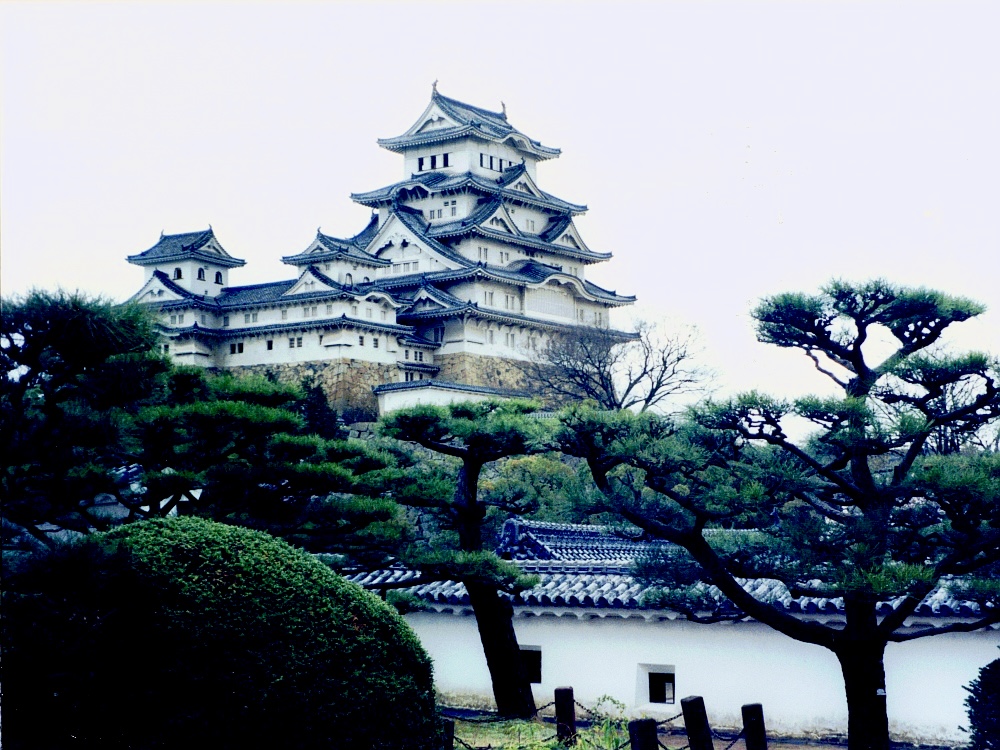
This tradition was in full swing the day I visited Himeji’s famous White Heron Samurai castle. This iconic castle sits on a low hill overlooking an expansive park in the centre of town. The park was filled with happy revealers on picnic rugs shaded by blossom-laden trees. The park was originally defensive land laid out in front of the castle. Today it’s still partially enclosed by the castle’s original moat.

Most visitors to the park, and castle, enter via the Sakuramon-bashi Bridge. The bridge leads onto Sannomaru Square, an open field ringed by Sakura trees. In Spring the square and surrounding parklands are transformed into a sea of blossoms. After visiting the castle, I decided to stop for lunch under a tree and enjoy homemade sandwiches secreted from my hotel breakfast room that morning.

As I sat, I was approached by a Japanese man. He asked in perfect English if I was alone. I said I was. He invited me to join his colleagues who were picnicking nearby. He was keen to practice his English and thought I’d enjoy participating in his company's annual picnic.

I accepted his invitation. I then spent several hours drinking beers and enjoying the sunshine with my newfound friends. I discovered that my drinking companions were from the local police station. Even funnier, thanks to an unusual Japanese tradition, the local police force got me rather plastered.


I’d forgotten that it’s considered rude to fill your own glass. Instead, you’re supposed to fill each other’s glass as you drink. Your drinking companions then signal that they're ready for a refill by diligently filling your glass. As a result, my English-speaking friend kept patiently filling my glass which I duly consumed again and again. One of his mates eventually cottoned on to what was happening and began filling his glass on my behalf.

I can therefore claim to have been entertained by the Japanese police force. I can also claim the dubious distinction of being publicly intoxicated in the middle of the day and bear witness that the local police were responsible for my intoxication.


The White Heron castle was truly magnificent. I cannot describe how visually stunning it is. The day I visited, cherry blossoms were in full bloom everywhere I looked, creating the perfect backdrop for the castle’s striking white walls and black-trimmed eaves. I spent a couple of hours exploring this remarkable building and its grounds. This included progressively making my way up to its uppermost floor where the view was simply spectacular.

This multi-storey castle is unique. It’s one of a handful of Samurai castles still standing in their original timber form. Instead, most castles you see, including nearby Osaka and Hikone castles, are ferro-concrete reproductions. However, Himeji is the real deal.  

You can read more about the castle in a blog post I published when Garry and I visited in 2006.


Saturday, August 17, 2024

Classic Kyoto


During my first trip to Japan, I spent one and a half days exploring Kyoto's most famous temples and shrines, walking and riding trains from one end to the other. I’d set myself a mission to see as many of its historic sights as possible in the time available. In the end, a day and a half was barely enough time to do the city justice.

My first day's itinerary covered the city's eastern flank. This included Ryozen Kannon (the city’s War Memorial temple), Sanjusangendo Temple (home to 1000 Kanon idols), and the iconic Kiyomizudera Temple. Kiyomizudera was particularly memorable. I loved its hillside views of the surrounding Sakura in full bloom.


I started the day with a morning visit to Ninomaru Palace filled with an array of imperial artefacts, before crossing the neighbouring moat into Nijo Castle. The image above shows Karamono, the main gateway into Ninomaru Palace. From here it was on to Heian Jingu shrine and then to Nanzen-ji Temple, before heading south to Kiyomizudera.


In between I also found time to visit Ryōzen Kannon. This is a war memorial commemorating the dead from World War II. Its most notable feature is a giant white Kannon or seated Buddha statue, rising 24 metres from an elevated platform. The temple was conceived as a Buddhist alternative to the controversial Yasukuni Shrine in Tokyo, which has been a source of tension due to its enshrinement of convicted war criminals alongside other war dead.


Kiyomizudera (literally "Pure Water Temple") is one of Japan's most celebrated temples. It was founded in 780 on the site of the Otowa Waterfall in the wooded hills east of Kyoto. Its name speaks of the waters from the fall.  Kiyomizudera is best known for a wooden stage extending from the temple's main hall, 13 meters above the hillside. Balconies along its flank offer stunning views across the area's tree-clad hills and the city of Kyoto beyond.  The blossoms were in full force during my visit.


Behind Kiyomizudera's main hall stands Jishu Shrine, a shrine dedicated to the deity of love and matchmaking. In front of the shrine are two stones, placed 18 meters apart. Successfully making your way from one to the other with your eyes closed is said to bring luck in finding love. You can have someone guide you from one stone to the other. However, this is interpreted to mean that an intermediary is also required in your actual love life.

As the sun began sinking, I made a last-minute decision to backtrack and visit the less impressive Ginkakji Silver Pavilion. I then finished with a memorable sunset walk to the train station via the picture-perfect Philosopher’s Path.

This 1.5km paved walkway follows a tree-lined canal winding through the city’s eastern suburbs. This walk proved a spectacular finish to the day. As I walked, I was continually showered by gently falling petals. I honestly can’t think of a better way to experience the magic of Sakura season.


My second day in Kyoto was spent exploring Kyoto's western foothills. This included the iconic Kinkakuji Golden Pavilion on the opposite side of Kyoto, followed by a lengthy walk to the simple Zen garden at Ryoanji Temple. 

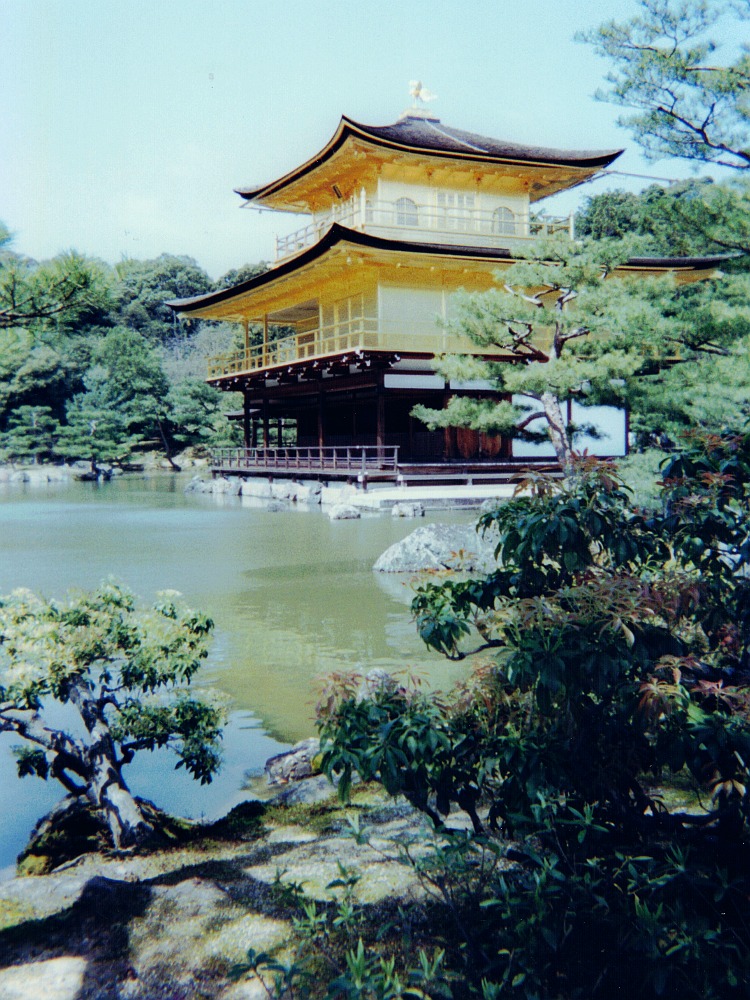
The Golden Pavilion is the city's postcard idol. It's a three-tiered structure set on the shore of an exquisitely manicured lake. The pavilion's top two storeys are clad in gold leaf that glistens spectacularly whenever the sun shines. Throw in a few cherry blossoms and you've guaranteed an absolutely breath-taking experience.


I simply loved the moss garden set into the hillside behind Ryoanji Temple, with the Kogetsudai mound coming a close second. This mound is a seamless conical mound constructed entirely of loose pebbles. I have no idea how the local monks kept in such flawless condition. Its perfection captures the essence of Japanese society - a combination of simplicity, elegance, and highly disciplined organisation.

However, having said this, Japan also has plenty of quirks. None more so than the ubiquitous presence of vending machines offering all manner of snacks, drinks and other daily necessities. You can even buy a cold Asahi beer (no ID required), or soft porno if you know where to go - I kid you not! 


You'll often find machines installed on random corners of suburban streets and along nondescript laneways. Need help finding my house?  Just look for the Coke machine outside.  Although I find it ironic that the Japanese considered it poor form to walk and eat or drink in public. To this day I still don't know where the locals go to consume their vended treats?

Finally, a little cultural highlight. The uniquely Japanese performance art of Bunraku originated in Osaka. It dates back to the 17th Century and blends complex puppetry with musical accompaniment and a chanted narrative. The lifelike puppets are beautifully handcrafted with elaborately decorated costumes and many individualized moving parts, giving them a full range of expression. These articulated puppets are so large that they require three puppeteers to operate them.


However, unlike most puppet shows, in Bunraku the puppeteers are visible throughout the performance, often dressed in black. The narrator or Tayu who chants and sings the story also voices the puppet characters, changing his speech and intonation to express different genders, ages, and social ranking.

Osaka is home to the National Bunraku Theatre. It puts on shows several times a year. My visit coincided with one such performance so I decided to treat myself to a unique cultural experience. Bunraku productions are either historical plays, such as the heroic revenge drama Chushingura, or romantic tales which dramatize the conflict between personal emotion and social obligations. Each performance can last up to three hours.

Sadly, I must confess that I lasted about an hour before declaring myself a Bunraku philistine. While the puppets were impressive, I was surprised to discover that the scenery and props were less elaborate and changed rarely during the show.  After an hour or so of chanting in a language I didn't understand, coupled with the knowledge I had at least another 90 minutes to go, I decided I'd experienced enough culture.  I quietly made my exit during one of the show's darkened scenes.

Chion-in Temple Gate

Heian Shrine

Saturday, August 10, 2024

Hakone Free Pass Circuit


The Hakone Circuit is a classic day trip. It’s normally taken from Tokyo and gives you a taste of Mount Fuji, Japan’s geothermal landscape and the scenic Japanese Alps. However, with a little planning, I realised it was also possible to complete the circuit from Osaka in a single day. It was ultimately the longest journey I took from Osaka, right at the extreme of what was realistically possible to explore in a day.

Visitors to the region buy what is called a Hakone Free Pass. This ticket gives you access to five different means of transport (train, cable car, ropeway, boat and bus). Collectively these form a scenic circuit that starts and ends at Odawara, a station on the high-speed Shinkansen line between Osaka and Tokyo.

Much of the circuit involves open-air activities. As a result, I monitored the daily forecast to ensure my excursion coincided with the best possible weather. I ultimately date-shifted my scheduled visit to make the most of the sunny weather later in the week. This proved a sage move as the day dawned bright and sunny.


The first transport mode is the Hakone Tozan Railway. This short-length train winds through a narrow, densely wooded valley, gaining more than 300 meters in altitude. Along the way, I stopped to visit the Hakone Open Air Museum for a couple of hours. I was keen to see its famous Picasso artworks and explore its sculpture garden filled with iconic Henry Moore sculptures.


Currently, eleven Henry Moore sculptures are displayed on the grounds of the Hakone Open-Air Museum. Their evocative curving forms are scattered across a sloping lawn and shaded glade, framed by distant tree-clad hills. Above is an example of one work self-evidently titled "Two Piece Reclining Figure: Cut".  

It's a little more soothing than the severed heads I also encountered. However, I must admit that La Pleureuse (“The Mourner”) by Claude and François-Xavier Lalanne with its vine-clad hair is rather intriguing. It's this post's opening image.


Visitors then transfer to a funicular cable car, before taking an ariel ropeway down to the eastern shore of Lake Ashinoko. At one point the ropeway passes over a steaming geothermal field while providing distant views of Mount Fuji rising over the lake’s northern end. However, much to my disappointment, the mountain was hidden in a cloudy haze during my visit.


The ropeway includes a transfer station where you can disembark to explore the thermal activity. I duly got off and spent half an hour wandering through the steaming hillside. As a Kiwi, I’d have to say I’ve seen better geothermal sights in Rotorua.

In hindsight, this diversion through the Owakudani steam fields highlights how much my travel habits have changed. Decades ago I'd map out an itinerary that took in the maximum number of tourist sights available in any location. It was often a list-ticking exercise that meant I'd carve out time to see things that weren't world-class or even all that captivating.
 

Upon reaching the shores of Lake Ashinoko, intrepid tourists then transfer onto a replica wooden sailing ship decked out in traditional pirate garb. It was a classic Japanese kitsch. As we sailed down the lake, the weather finally played its part. Much to my delight, the clouds and poor visibility briefly lifted, giving me my first-ever hazy glimpse of Mount Fuji.


In the years since I’ve been fortunate to see Mount Fuji from observation decks in Tokyo, from the air, and up close during my last visit to Japan in 2013. On this occasion, in addition to the late afternoon lake reveal, I also enjoyed iconic views of its perfect cone at dusk from a window seat on the Shinkansen while returning to Osaka.

I completed the Hakone Circuit by disembarking from the faux Spanish Galleon in Moto-Hakone and catching a bus back to the railway station. The entire circuit took almost seven hours to complete. The Shinkansen took about 3.5 hours each way. Hence, with an early morning start, my day trip became a 15-hour excursion once I was done.

Saturday, July 06, 2024

Another Kodak flashback


Time for another traunch of Kodak-era memories. I've published a few more posts on some of my earlier adventures. This includes my first time in China, Taiwan, and Indonesia. Read and enjoy.

Posts covering my first time in Beijing are particularly special to me. My trip, in 1998, occurred at a pivotal moment in China’s economic transformation. At the time, much of its original Mao-era infrastructure was still in place. As a result, I caught a fleeting glimpse of a China that’s long since vanished.

In the mid-1980s, while still at University, I recall a lecturer talking about China’s ambitious 30-year plan to transform itself into a developed nation. This extraordinary timeline involved growing its GDP by ten per cent or more each year. Incredibly, China achieved much of this growth in the time allotted, successfully averaging growth of 9.5% annually between 1978 and 2013. I was fortunate to see the last vestiges of the old world before it was gone. 


Next up on my list of retrospective posts are stories about my first time in Prague (I took my parents there in 1996), plus holidays in Seattle, Las Vegas and Japan during Sakura season. At some point, I’ll also capture my experience of backpacking through Europe for five months in 1990.

Wednesday, June 26, 2024

The Forbidden City


Here’s a final post on my very first visit to China in August 1998. You’ll recall my hotel’s tour desk organized a private tour of the Great Wall at Simatai. They also booked me a private day tour covering three of Beijing’s most famous imperial landmarks. This included a morning tour of the majestic Temple of Heaven, a tour of the expansive Forbidden City and an afternoon touring the Summer Palace.


While I was vaguely familiar with the Forbidden City, the Temple of Heaven was completely new to me. Interestingly, whenever local artisans attempt to capture the spirit of their city, they'll often turn to images and silhouettes of the distinctive conical roof capping the Hall of Prayer for Good Harvests. It's the largest building in the Temple of Heaven complex and instantly stops you in your tracks the first time you see it.

I’ve subsequently visited the temple twice, once with Garry and once with my parents. My blog post about Garry’s visit includes some of its history and its strategic role in imperial Chinese culture. However, for now, I'll give the Imperial Vault of Heaven a quick shout-out. It is surrounded by a smooth circular wall. Known as the Echo Wall, visitors can stand on opposite sides of its internal courtyard and hear each other talk.


The Forbidden City proved every bit as iconic as guidebooks promised. The sheer scale of the complex is hard to comprehend. The compound, surrounded by massive stone walls, is a rectangle 961 metres from north to south and 753 metres from east to west. It contains 980 surviving buildings with 8,886 rooms, a figure which excludes antechambers. As a result, my guided tours took several hours to trace a route north from the Meridian Gate, near Tiananmen Square, to the Gate of Divine Prowess that leads into Jingshan Park.


Meridian Gate is a spectacular entrance. The gate itself is framed by two massive red brick walls on either side extending towards the south. The walls rise more than 12 metres and are capped by a series of ornate Que pavilions (you can see one of these in the image above). The top of the central pavilion sits more than 60 metres above the surrounding courtyard, resulting in a truly dramatic entrance.

The gate has five arches. Three central arches are close together in the main, central section, while two smaller flanking arches lie closer to the protruding wings. The largest central arch was reserved for the emperor’s exclusive use, while all other officials and servants had to use the four side arches.


Once through the gate visitors then proceed through a series of enclosed courtyards, inner gates, and internal moats before finally reaching the emperor’s innermost sanctum. Each of these structures is awe-inspiring. The statistics rattled off by the guide as you walk are simply mind-boggling. 

For example, here’s an extract from Wikipedia, describing just the outer walls. Imagine, if you can, similar descriptions progressively bringing to life each courtyard, ceremonial gate, imperial structure, and palace life in general.  

The Forbidden City is surrounded by a 7.9-metre-high city wall and a 6-metre-deep by a 52-metre-wide moat. The walls are 8.62 metres wide at the base, tapering to 6.66 metres at the top. These walls served as both defensive walls and retaining walls for the palace. They were constructed with a rammed earth core and surfaced with three layers of specially baked bricks on both sides, with the interstices filled with mortar.


The hotel tour desk arranged one final tour during my time in Beijing, a half-day trip to the sprawling Summer Palace complex in the city’s northern suburbs. My private guide took me through the entire palace complex from the main entrance through the primary residence and along a 728-metre-long passway (aptly named the Long Corridor) towards an iconic white marble paddle steamer.


Along the way, I took time out to climb the hundreds of steps leading up to Foxiang Ge (Tower of Buddhist Incense). This ornate nine-story pavilion sits 60 metres above the surrounding area on the slopes of Wanshou Shan (Longevity Hill). The view from here, overlooking Kunming Lake, is breathtaking, to say the least.


The Silk Bridge and Peace Garden were equally memorable. The garden is a replica of one in Wuxi. Apparently, when Emperor Qianlong went south on an inspection tour, he visited the Jichag Garden (Garden for Ease of Mind) in Jiangsu province. He liked it so much, that he had it recreated in the Summer Palace.

You can read more about the Summer Palace here after taking my parent to see it in 2012. On this second occasion, we didn’t climb Longevity Hill, but did take a boat trip across Kunming Lake. To date, Garry’s never seen the palace.


The following day I caught an early morning flight with British Airways to London. My flight departed from Terminal 1, Beijing Airport’s first modern-era international gateway. This modest building was constructed in 1980, replacing an even smaller, austere Mao-era structure.

It consisted of two stubby wings with distinctive late-70s style interiors, each terminating in a circular atrium with half a dozen departure gates. In the distance, you could see a larger, new terminal under construction. I read recently that Terminal 1 was refurbished and updated shortly after its new neighbour opened the following year. As a result, like much of Beijing's infrastructure at the time, I was lucky to experience its original and archaic formation.

I distinctly recall an old woman sitting behind a simple trestle table next to one departure gate. She was selling handmade souvenirs including miniature terracotta warriors, and other iconic handmade trinkets. It was a genuinely ramshackle affair. Her clay figurines were smeared with residual factory mud and clumps of straw.

The new terminal was opened by the time I returned five years later. However, the airport quickly outgrew this building and a massive third terminal was constructed. I’ve also passed through this third building on multiple occasions. Incredibly, Beijing has now built an entirely new airport on the city’s southern flank to cope with growing demand. As for that first terminal I visited all those years ago, it’s now home to secondary airlines offering domestic flights. Over the years, I’ve seen a similar transformation unfold at airports in Xian and Shanghai.